Laughter, Trauma, and Telling the Truth: My Guest Appearance at the Mental Health Hour Comedy Show

That is exactly what happened at the Mental Health Comedy Hour show at All Out Comedy Theater in Oakland.
The comedians were hilarious, deeply talented, and incredibly honest. The show, which happens every second Friday of the month, creates space for conversations about mental health in a way that feels accessible and human. Sometimes people cannot tolerate another clinical lecture about trauma, depression, a
nxiety, or suffering. Sometimes people need to laugh first so their nervous system can finally loosen its grip enough to hear the truth underneath it all.
And honestly, that is what made the night so powerful.
I had the honor of being the featured mental health practitioner for the evening. During the pseudo talk-show segment, I was interviewed about my experiences both as a therapist and as someone who has spent a lifetime in therapy myself. We sat on a staged “comedy therapist chair,” got uncomfortable, laughed through difficult truths, and talked openly about trauma, systems, healing, and what it actually means to survive hard things.
Some friends recorded short clips from my segment that I will share here. I will not be sharing clips from the other comedians out of respect for their art and intellectual property, but if you want to check out their work and support them, you can follow them on Instagram:
@briangovcomedy
@ivyleaguecomedy
@teamwonderdave
@rabidpixie

“Who Fucked You Up?”: A Funny Question with a Heavy Answer

One of the questions I was asked during the show was:
“Who fucked you up?”
A funny question on the surface.
A devastating question underneath.

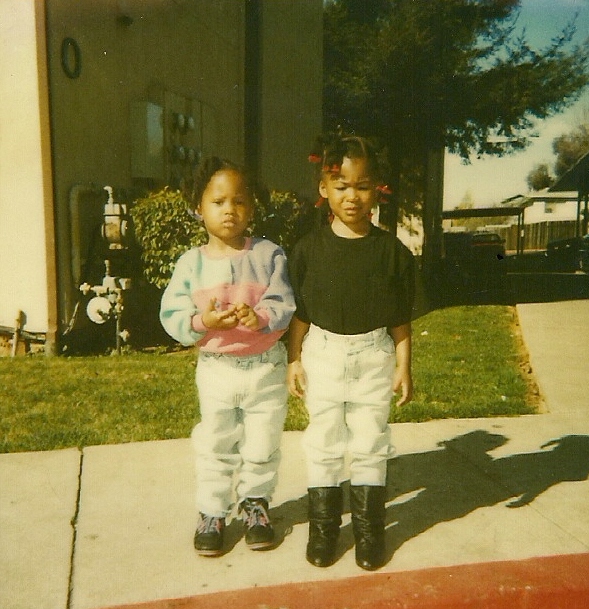
Since being asked that question, I have spent time reflecting on my upbringing and the reality of being parented by people who simply were not emotionally, financially, or psychologically equipped to raise a child.
That reality included:
Teen pregnancy
Poverty and lack of financial resources
Generational trauma
Dysfunctional parenting patterns passed down through generations
Living in survival mode instead of emotional connection
One of the things therapy has helped me understand is that on a micro level, yes, there was harm in my household. Sometimes hurt people hurt people. Adults who were abused often repeat those same behaviors with children because they never learned another way to exist.
But when I zoom out and look beyond my own individual suffering, I can also recognize the larger systemic issues that were operating at the same time.
Because, as I always say, trauma does not happen in a vacuum.
The Systemic Reality Behind Family Trauma
We live in a society where many people are barely surviving financially, emotionally, and psychologically. When people are overwhelmed by stress, poverty, racism, violence, exhaustion, housing instability, and lack of support, their emotional tolerance shrinks. Parenting becomes less about nurturing and more about trying to survive another day.
One of the things we rarely discuss openly is how isolated modern parenting has become. There was a time when raising children was often communal. Grandparents, aunts, uncles, cousins, and neighbors played active roles in caregiving. Today, many families are expected to raise children in near-total isolation while simultaneously working exhausting jobs just to survive.
We continue pushing “independence” and solo living as success while ignoring how deeply disconnected and unsupported many families actually are.
When parents were overwhelmed, unsupported, dysregulated, and traumatized themselves. Children often absorb the emotional consequences of systems that failed everyone involved.
Foster Care, CPS, and the Questions We Avoid Asking
During the show, we also discussed systems that are supposed to protect children and families.
Our CPS system is profoundly overworked. Our foster care system remains deeply flawed. And one of the painful realities many people recognize is this: we often remove children from families struggling financially, then pay strangers to care for those same children with resources that may have helped stabilize the family in the first place.
That does not mean every home is safe.
That does not mean intervention is never necessary.
But after decades of these systems operating as they have, many people understandably question whether this is truly the best we could create.
For those who have experienced foster care and resulting complicated family systems, I shared a resource called A Home Within. An organization that provides free therapy and emotional support for individuals impacted by foster care and relational trauma.
For many people, access to therapy is limited by cost, insurance, transportation, and availability. Programs like this can be life-changing.
Growing Up Black During the Reagan Era
Of course, I cannot discuss my childhood without discussing one of the larger systemic realities impacting Black families during the 1980s:
“Ronald Fuckin’ Reagan.”
For many Black families, the Reagan era was not just politics happening somewhere far away in Washington. The policies implemented during that time had direct impacts on communities already struggling under the weight of systemic racism, disinvestment, and economic inequality.
Cuts to social programs and resources disproportionately harmed low-income families. Simultaneously, the crack cocaine epidemic devastated Black communities across the country. Investigations and historical reporting have long examined the complex relationships between U.S. foreign policy, the Iran-Contra era, drug trafficking, and the flooding of crack cocaine into vulnerable communities.
And suddenly, many Black children watched communities change almost overnight.
People who had once been stable, educated, family-oriented, and thriving became consumed by addiction. Parenting became overshadowed by survival and substance dependence. Communities became saturated with violence, desperation, competition, and trauma.
Children grew up watching pain everywhere around them.
The people with money and power often became the drug dealers because legitimate opportunities had been systematically stripped away. Meanwhile, families already drowning in poverty and trauma used substances to numb unbearable emotional pain. My family was impacted by the Reagan era and we are still recovering.
When people ask why trauma exists in communities, they often want individual answers while ignoring the systems that manufactured the conditions in the first place.
“Why Would Someone Want a Therapist with Trauma?”
Something you may ask yourself while reading about my life is, “Why would someone want a therapist who has been through so much trauma themselves?”
And honestly, many of my clients specifically seek that out.
Not because suffering automatically makes someone a good therapist.
It does not.
But lived experience can create depth, nuance, empathy, and understanding that cannot always be taught solely from textbooks.
I know what trauma feels like in the body.
I know what hypervigilance feels like.
I know what it is like to sit in therapy and desperately hope someone understands what you are trying to explain.
I know what it is like to rebuild your identity after surviving chaos.
This work is not theoretical for me.
I have been in therapy all. of. my. life.
And while education, certifications, and training absolutely matter, many people also want a therapist who understands the reality of surviving trauma rather than simply analyzing it from a distance.
The goal is not to stay trapped inside our trauma stories forever.
The goal is to reclaim power, connection, identity, joy, and emotional freedom so that trauma no longer consumes every aspect of our lives.
When Therapy Is Not the Right Fit
One of the most important conversations from the night centered around therapy itself. Specifically what happens when therapy is not the right fit.
Several comedians shared stories about:
Therapists who were not equipped to handle suicidal ideation or homicidal thoughts
Feeling dismissed or misunderstood in therapy
Negative experiences with large therapy platforms
The increasing push to replace human connection with AI-based emotional support
We also discussed agencies like BetterHelp and Kaiser Permanente. Broader concerns many clinicians and clients have raised regarding therapist compensation, continuity of care, privacy concerns, and inconsistent quality of services.
One thing I emphasized is that if you know you are receiving services that are not helping you, it is okay to ask for a change of therapist.
It is okay to say:
“This is not working for me.”
“I do not feel understood.”
“I think I need someone with a different skillset.”
“Can you help connect me with someone who may be a better fit?”
Ethical therapists understand this.
Licensed clinicians are accountable to professional boards and ethical standards that are designed to protect clients. Sometimes the most ethical thing a therapist can do is acknowledge that another provider may better meet a client’s needs.
You are the expert on your own experience.
Therapists are tools and guides, not dictators of your healing journey.
And therapists are human too.
We make mistakes.
We miss things.
We are imperfect.
The priority should always be your safety, your growth, your healing, and your ability to build a life that actually feels worth living.
The Risks of Replacing Therapy with AI
Another major topic that came up during the show was the increasing use of AI as emotional support and, in some cases, a replacement for therapy altogether.
While AI can sometimes provide emotional support, journaling prompts, coping ideas, psychoeducation, or temporary comfort, it is not a substitute for licensed mental health care.
Some risks of relying on AI for therapy include:
AI cannot accurately assess risk for suicide, homicide, psychosis, abuse, or medical emergencies
AI lacks true clinical judgment and ethical accountability
AI cannot provide crisis intervention or mandatory reporting when someone is in danger
AI may unintentionally reinforce distorted thinking or harmful beliefs
AI cannot fully understand cultural nuance, dissociation, trauma complexity, or severe mental illness
AI does not provide true human attachment, co-regulation, or relational repair
Some platforms collect, store, or monetize sensitive emotional information
AI responses can sometimes be inaccurate, emotionally invalidating, or dangerously inappropriate
People may isolate further from real human connection while depending heavily on technology for emotional care
Healing is not just advice.
Healing often happens through relationship, attunement, accountability, safety, nervous system regulation, and genuine human connection.
Why Comedy and Mental Health Work So Well Together
What I loved most about the Mental Health Hour comedy show was that underneath all the jokes was something deeply human:
people trying to make sense of suffering together.
Comedy allows us to say the quiet parts out loud.
It lets people exhale.
It lets shame loosen its grip.
It creates connection where isolation used to live.
Sometimes it starts with a nervous system finally feeling safe enough to laugh.


hi
ReplyDelete